
Drawing from decades of firsthand experience in Idaho’s wilderness, Travis Bullock, owner of Mile High Outfitters, looks back at wolf reintroduction and its lasting impact on elk, moose, hunters, outfitters, and wildlife management across the state.
Highlights
- Wolf reintroduction has reshaped wildlife management in Idaho, especially for elk and moose.
- Hunters and anglers fund a major share of wildlife conservation through federal excise taxes.
- The author supports stronger incentives for wolf harvest to help manage Idaho’s wolf population.
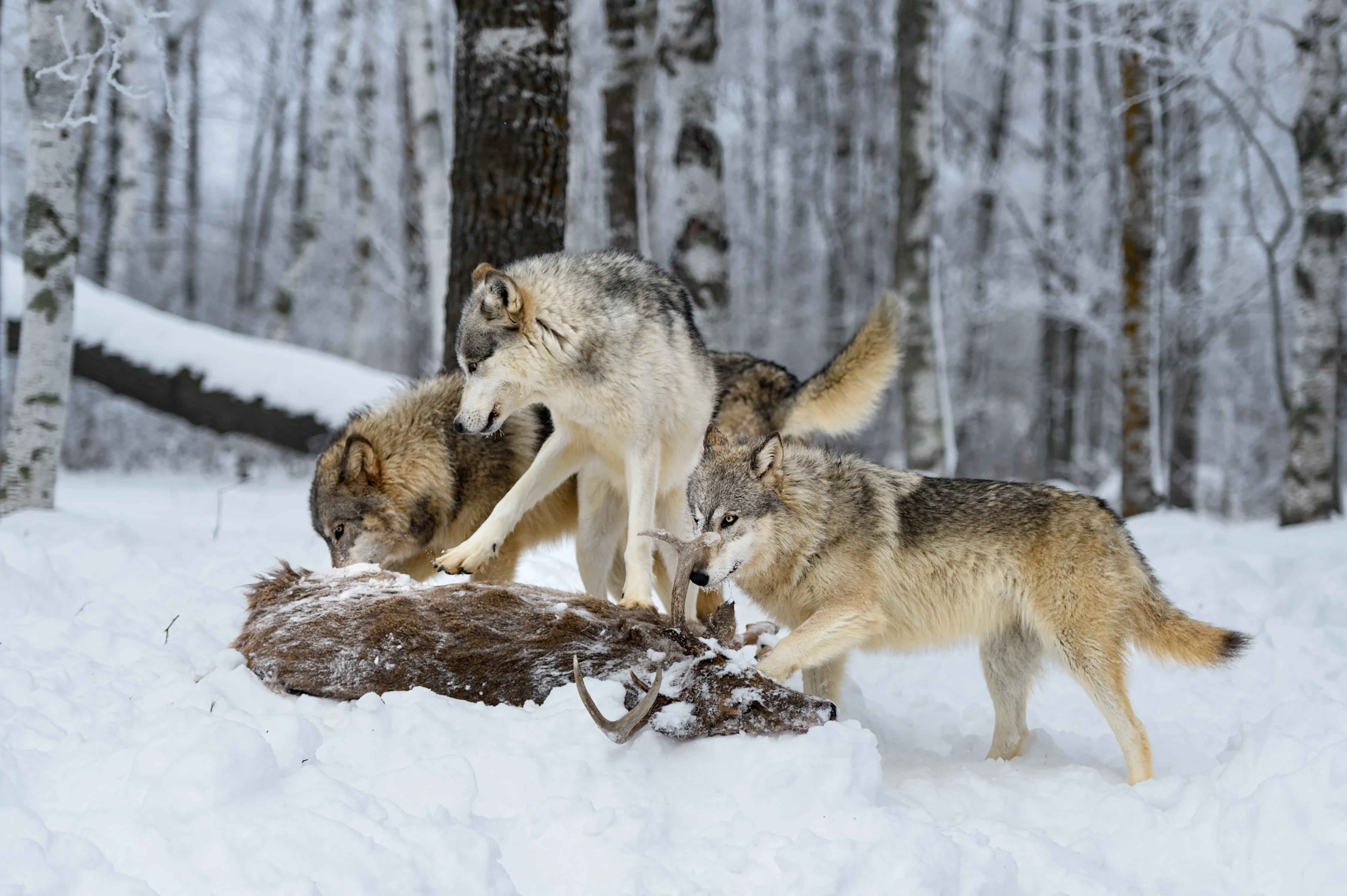
In January of 1996, the impossible happened. The U.S. Fish and Wildlife Service reintroduced a species of wolves into Yellowstone and Central Idaho that has had more impacts than any reintroduced species before or since. At the time, pro-wolf advocacy groups were printing information telling folks that the cost to the average American was less than the cost of a postage stamp to reintroduce wolves. The irony? The wolf reintroduction was paid for by the folks who despised it most.
The U.S. Fish and Wildlife Service receives its money from two major sources: the Pittman-Robertson Act and the Dingell-Johnson Act. The Pittman-Robertson Act is a tax on firearms and ammunition, and the Dingell-Johnson Act is a tax on fishing tackle. These taxes are paid by the manufacturer, so they are hidden from the consumer. Regardless of how they are collected, they are paid for by hunters and fishermen. Over the last 25 years since the wolf reintroduction, our elk herds and moose populations here in Idaho have been reduced, so I guess you could say that hunters have paid for the wolf reintroduction twice: once in taxes and once with the loss of wildlife.
So how can organizations such as Defenders of Wildlife claim victory for a subspecies that may or may not have existed in Idaho before the reintroduction? How can an organization that is supposedly pro-wildlife ignore the decimation of certain species just so wolves can run roughshod? It’s easy. Follow the money.
Wolves and bears have a way of aligning themselves with human sympathizers. They are jokingly referred to as “big, sexy predators”. Wolves especially are compared to family groups along with humans. The alpha male (dad) and alpha female (mom) have a litter of pups (children) in year one. In year two, they have another litter, and the first litter becomes the teenagers who help raise the younger ones. Walt Disney would be proud.
When viewed from a business standpoint, wolves are an easy sell to the sympathetic housewife in charge of the checkbook or the large corporation needing a positive image. It’s popular. Would you sleep better at night knowing you donated money to a good cause that helped save a species? Of course you would. Being green is the new red, white, and blue, and the more controversy caused by wolves, the more money is made by anti-hunting groups relying on naïve donations.
Make no mistake, the wolf reintroduction is big business. I bought Mile High Outfitters at the same time as the wolf reintroduction, and my business plan included guiding people to view wolves in the Frank Church. In about 1997 or 1998, Brenda and I traveled to DC and New York City to advertise at sport shows, visit our nation’s capital, and visit the headquarters of Defenders of Wildlife and other pro-wildlife, anti- hunting organizations. I felt our best marketing for wolf viewing trips would come from getting a brochure directly in the hands of the people who wanted wolves here in the West. I was amazed at the number of attorneys and overall people employed by these supposedly non-profits. What was the result of marketing wolf trips through these pro-wolf organizations? In our best year, wolf tourism made up 15% of our gross revenue. Bottom line, no one supports wildlife like hunters.
Since the introduction of wolves, Idaho has struggled to manage wildlife. Moose and elk have taken the hardest hit. At our high point, Idaho issued over 1200 moose tags. Today we issue closer to 500 moose tags. Elk numbers have been reduced, but elk are creative. Many large herds have moved to private property and never left. Elk may not be welcomed in a rancher’s alfalfa field, but wolves are even less welcome in the rancher’s cattle. To the detriment of many landowners, IDFG, and hunters, elk have found some sanctuary on private land. The few thriving moose populations in Idaho also have ties to private land/low wolf densities.
The management goal in Idaho is 500 wolves. We currently have about 1100-1200, and no matter how hard we try to reduce their numbers throughout the year, they bounce right back when they have pups in the spring. There’s an organization called the Foundation for Wildlife Management (F4WM) that was started in northern Idaho. Their goal is to help ungulate populations by helping reimburse trappers and hunters who harvest wolves. They are a grassroots organization dedicated to a natural balance of wildlife that involves human hunters. If you are looking for an organization to support, F4WM is at the top of my list.
One of the ideas I proposed to the director and the commission of the IDFG is to let a non-resident who harvests a wolf skip the lottery system for an elk or deer tag, or, if you are a resident who harvests a wolf, you get your name put into the drawing again. In other words, if you harvest a wolf as a non-resident, you get a guaranteed tag for elk or deer the following year. If you are a resident trapper who harvests 10 wolves, you get to put your name into controlled hunts 10 times. This would give IDFG another tool to reduce the wolf population to manageable numbers and would cost the department nothing. If put up for auction, a non-resident Idaho Bighorn Sheep tag has a value of $100k plus. If it costs someone 5k in expenses to harvest a wolf, you could offer a sheep tag to any resident who harvests 20 wolves. That trapper/hunter could either keep the tag or sell it to get reimbursed for his expenses. Selling off our wildlife is not popular in Idaho, but let’s face it, is it smart to sell a $100,000 sheep tag to a non-resident for $2,000 when we could be using that lost value of $98,000 to manage wildlife? There is a fine line between our socialized system of the North American Model and our state statutes in Title 36 that declare the wildlife to be owned by the state and managed for the citizens of this state.
Regardless of how you feel about wolves, their management, or natural balances with man, we are not managing Idaho’s wildlife to give residents the maximum benefit.
We can all complain about the system, but true change comes from within. Before heading out to the woods, make sure you pick up a wolf tag or twenty. You never know when that opportunity is going to present itself, and who knows, you may find the trophy of a lifetime, and you could receive a few thousand dollars in reimbursement from IDFG or F4WM for your harvested wolf. Good hunting this fall!